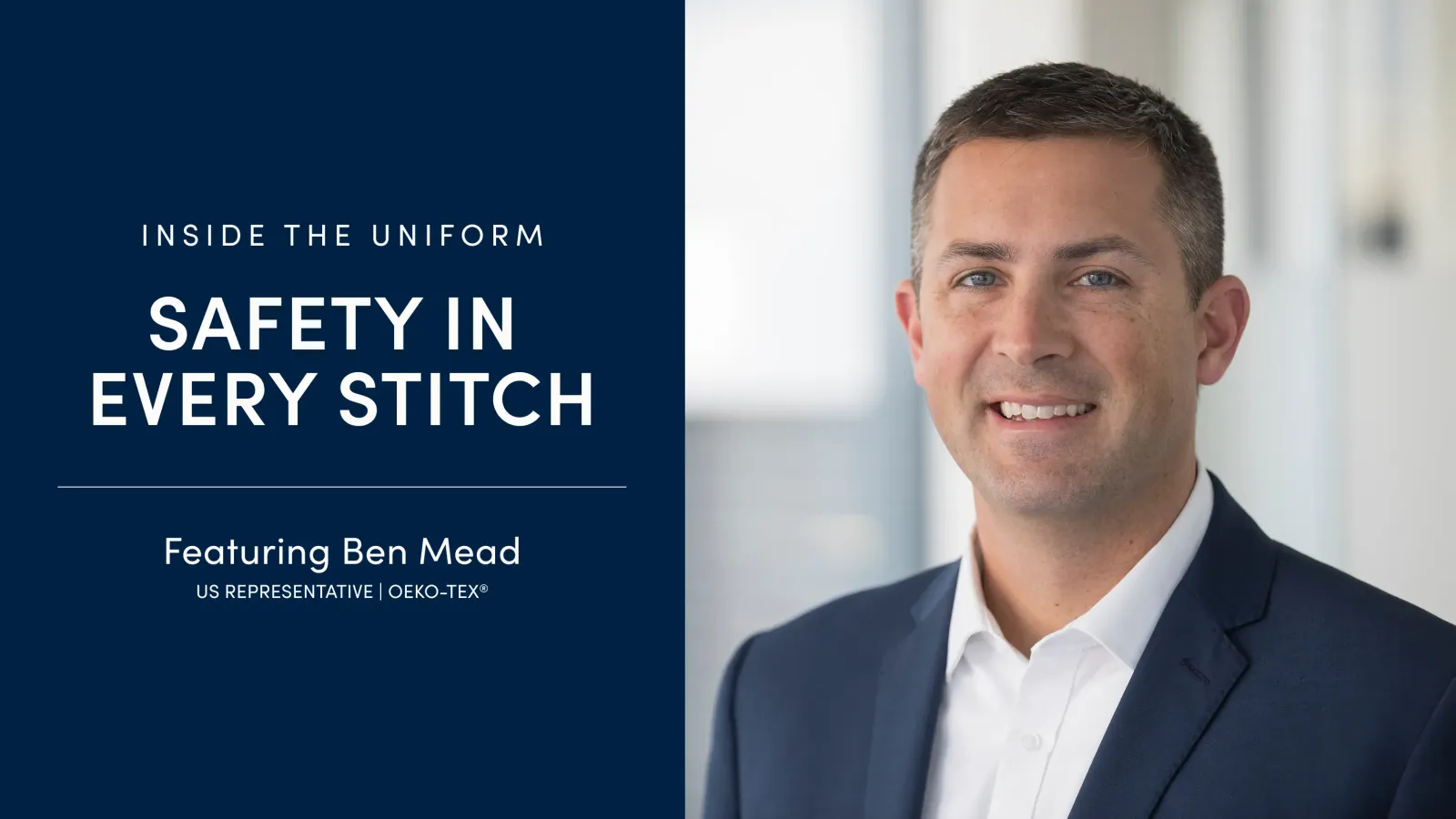
A Conversation with Ben Mead - US Representative, OEKO-TEX®
Increasingly, parents and school administrators recognize the importance of safety in every aspect of children’s lives. That’s why, as a major U.S. school uniform retailer, Lands’ End offers OEKO-TEX® STANDARD 100 certified K-12 uniforms. Because like our customers, we’re committed to protecting what matters most—the students who wear our products every day.
Founded in 1992 and headquartered in Zurich, Switzerland, OEKO-TEX® is an independent, global certification system for textile safety and sustainability. We spoke with US OEKO-TEX® representative and Managing Director of testing agency Hohenstein, Ben Mead. Here’s what Ben had to say about the increasing importance and awareness of product safety as well as the OEKO-TEX® certification process.
“OEKO-TEX® STANDARD 100 is really the benchmark…”
I have a chemistry background focused on textiles and have been with Hohenstein for 12 years. Hohenstein is one of 17 certification bodies which test products and issue certificates on behalf of OEKO-TEX®. It’s also the largest and one of the founding members of OEKO-TEX®. Depending on the year, we issue around 45 to 50% of the certificates.
Our role here in the US is working mainly with North American brands, manufacturers and retailers, to help them understand the certifications, what the process looks like and help them implement it either for themselves or for partners in their supply chains.
OEKO-TEX® was created in 1992 in response to textile production moving away from local markets in Europe and North America. With the companies now manufacturing products further away from brands, there was a need to ensure that products were still being made safely. At the same time, consumers were also becoming more aware of product safety. It came together to create this certification label— OEKO-TEX® STANDARD 100 is really the benchmark certification—so that consumers could make an educated choice.
“…everything must be tested: sewing thread, buttons and labels…”
For consumers to trust that a product is going to keep them safe, everything must be tested: fabric, sewing thread, buttons and labels and anything in the garment that somebody could be exposed to. If it’s going to have some functionality or color, chemistry is involved. Even if we think about natural materials, it takes a lot to process cotton from the field where it’s grown to something that’s suitable to be worn.
Testing is typically distributed among the supply chain. A garment factory might have a certificate that covers the whole product, but most testing is probably happening at different places where the materials are sourced. You need to have a certificate that covers the whole product and all the materials that go into it.
OEKO-TEX® brings together technical experts from the industry to understand what’s important for legislative compliance and what’s important to customers, before issuing an update to the standard at least once a year. As companies’ certificates expire, products are retested, so there’s a rolling annual update.
“…we think of children as one of the most vulnerable populations.”
With children spending hours each day in their uniforms, OEKO-TEX® gives families additional peace of mind. At OEKO-TEX® we think of children as one of the most vulnerable populations. They’re playing, running and sweating in these uniforms all the time. Sometimes, even when we don’t want them to, they’re putting them in their mouths. All those things are considered by the OEKO-TEX® teams, which include garment construction experts and toxicologists. What’s important is determining the amount of exposure, considering the wearer’s size and weight and how long the garment will be worn.
“Lands’ End is doing it because it’s the right thing to do…”
While some retailers and school uniform companies are using OEKO-TEX®, it’s not a super high percentage. I think people are surprised by how little protective legislation there is in the U.S. Lands’ End is one of those that’s been doing this for a long time. It enables them to focus on supply chain partners that are doing it the right way, which in turn increases the number of products that can be certified. However, it also adds cost to their process. Lands’ End is doing it because it’s the right thing to do, because it protects their brand and because customers expect it. There is also a higher expectation around quality and consistency.
Ultimately, when parents are getting their kids dressed in the morning, I don’t want them to think about chemicals. With OEKO-TEX® STANDARD 100 certification, they know the product is safe when they buy it. After all, they have enough other stuff to worry about, like, did homework get done? Is lunch packed? Does everybody have a ride home after school? Together, OEKO-TEX® and Land’s End school uniforms ensure they have one less thing to worry about.